
The standing of Russia in the war against Ukraine no longer appears as robust as it once did. The shift in sentiment in the West coincides with a tangible weakening of the Russian Federation, both on the battlefield and economically.
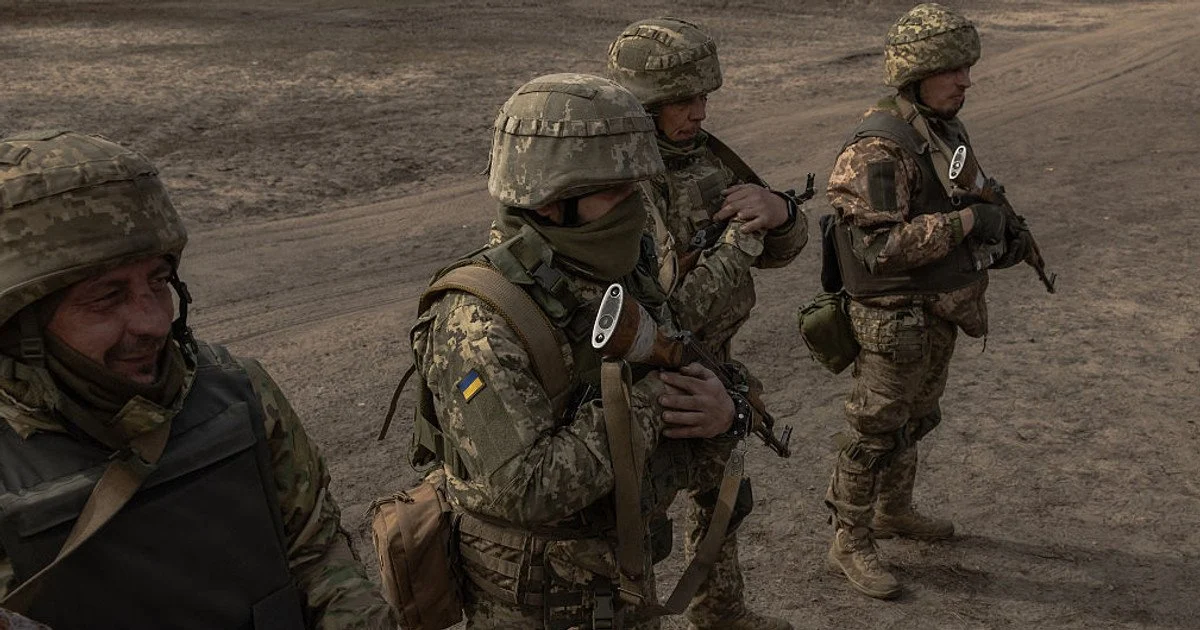
ЗСУ / © Getty Images
A change in attitudes regarding the conflict in Ukraine has spelled bad news for the Russian economy. Whereas previously, numerous Western politicians believed that time favored Russia due to its vast size and resources, this assessment is now beginning to evolve.
This observation comes from the Financial Times.
According to the publication’s assessment, following the commencement of the full-scale invasion, Ukraine was frequently perceived as the party in a weaker position. Even the admiration for the courage of Ukrainians and the leadership of President Volodymyr Zelensky did not alter the overarching impression that Russia held an advantage due to its greater resources.
However, the situation has begun to transform this year. As noted by the FT, Russia’s influence is diminishing both on the battlefield and within its economy.
The publication draws attention to the advancement of Ukrainian military technologies, particularly drones and counter-drone systems. The demand for Ukrainian solutions from US allies in the Middle East, as estimated by the FT, signifies a substantial elevation of Kyiv’s standing.
Furthermore, Ukraine is enhancing its capability to strike targets within Russian territory, including Moscow. Attacks on oil refineries have curtailed Russia’s export capacities, and assaults on energy infrastructure are creating escalating challenges for the Russian economy.
Concurrently, the Financial Times reports, Russia is nearing the limits of its economic potential. Inflation, which may exceed official figures, points to a scarcity of resources. Non-military sectors are finding it increasingly difficult to finance their operations, as the state has allocated maximum labor and capital to the war effort without resorting to full conscription.
According to FT data, these capacities are now being depleted. The budget deficit is widening, and the Russian government has already surpassed its planned deficit spending for the year. In the first quarter, economic growth decelerated, and payments to deceased and wounded soldiers have become so substantial that they carry macroeconomic significance.
A new report by the Kiel Institute, titled “Endgame,” also addresses the constraints of the economic resources upon which Moscow relies. The rise in oil and gas prices, in the context of the conflict with Iran, has not yielded the anticipated results for Russia, partly due to Ukrainian strikes on energy facilities.
The situation is further impacted by Europe’s stricter approach to Russia’s “shadow fleet” of tankers and trade sanctions, which complicate the use of export revenues for importing military-grade goods.
The FT points out that Moscow’s deficit spending might appear manageable in absolute terms, but a portion of the war’s financing is effectively hidden within targeted private lending and borrowings by regional governments. All of this contributes to heightened financial instability.
Meanwhile, Russia’s support from China involves not only substituting Western technologies with Chinese ones but also rerouting Western goods. It is precisely this, the publication writes, that secondary sanctions and targeted European policy measures can effectively impede.
Against this backdrop, the Ukrainian economy, despite continuous Russian attacks, has managed to partially offset the production decline experienced after 2022. It is anticipated to continue growing this year, with tax revenues gradually increasing and business expectations improving.
At the same time, Kyiv remains dependent on financial assistance from its allies to cover its war expenditures. However, according to the FT’s assessment, the past year has demonstrated Europe’s capacity to fill the void left by the United States. The €90 billion loan agreed upon by the EU in December is beginning to arrive, and European funds are already being directed towards Ukrainian military production.
The Financial Times believes that the shift in sentiment aligns with a genuine turning point in favor of Ukraine. This creates a window of opportunity for Kyiv’s allies to further alter the balance by supporting Ukraine and limiting Russia’s capacity to wage war.
This includes, in particular, strengthening sanctions, improving enforcement, combating circumvention of restrictions, and transferring frozen Russian assets to Ukraine as an initial contribution towards future reparations.
The Kiel Institute also proposes imposing duties on remaining trade with Russia that is not yet subject to sanctions, with the proceeds being transferred to Ukraine.
As the FT concludes, this prescription is not new, but the outcome could be unexpected: for the first time, not only Ukraine but all of Europe can afford to contemplate victory.
We remind you that **worse times await Russia due to Ukraine’s strikes**. **This was stated by the head of the Center for Countering Disinformation (CCD) under the National Security and Defense Council of Ukraine, Lieutenant of the Defense Forces Andriy Kovalenko.**
Meanwhile, the fuel crisis in the Russian Federation due to Ukrainian attacks has reached a new level: **a shortage of gasoline and aviation fuel has forced** Moscow to lift restrictions on fuel supply and import from third countries.
Комментарии Сортировать: Новые Старые Популярные Надіслати