

Ukraine has identified a leverage point that could influence the Kremlin’s cost-benefit calculations.
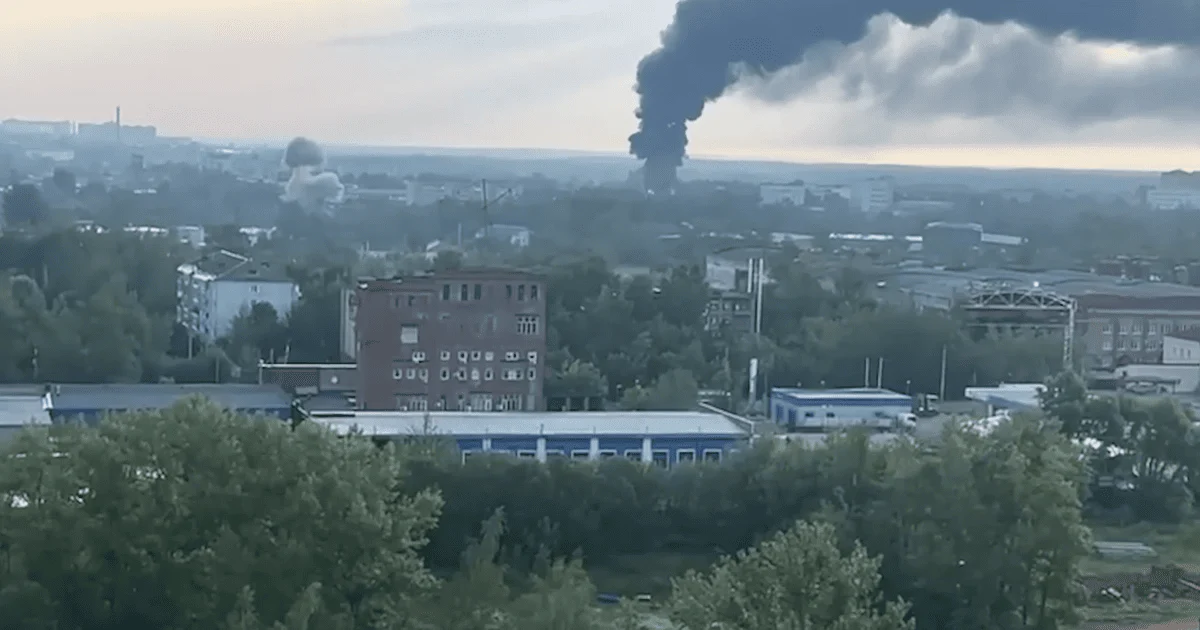
Explosions in the RF / © Screenshot from video
The next stage will likely involve strikes on railway infrastructure, as Russia has certain limitations and vulnerabilities in its railway network.
This opinion was shared with “24 Channel” by expert Serhiy Grabsky.
“The majority of the railway infrastructure in the European part of Russia is electrified, whereas the Asian part is not. In the context of a fuel crisis, one can only imagine what will happen if the Asian part of Russia is left without fuel to meet transport needs. This would be a collapse, as the railway is the primary route for resource supply and export to Far Eastern ports,” emphasized Serhiy Grabsky.
Strikes on Russian Refineries – What is Known
In the last 100 days, Kyiv has carried out approximately 50 attacks on Russian oil refineries. A series of Ukrainian attacks on Russian refineries has led to oil processing volumes in Russia falling to their lowest level in over 21 years.
According to EA Analytics, the average crude oil processing rate this month stood at 3.91 million barrels per day – the lowest figure since March 2005. This is more than 1.4 million barrels per day below last year’s average. The International Energy Agency estimates that in June, Russian refineries processed 3.8 million barrels per day – 1.6 million barrels less than a year earlier. The IEA noted that the “torrential wave of Ukrainian attacks” has impacted more than half of Russia’s oil refining capacity since early May.
Major Russian energy companies have approached Indian refiners with requests to increase gasoline supplies amidst domestic fuel production issues.
According to analysts, companies that have approached Indian partners include Rosneft, Gazpromneft, and Lukoil. They requested additional gasoline volumes from private and state-owned Indian refineries.
Comments Sort: New Old Popular Send