
The current aggression against Ukraine might have similar historical repercussions for Russia as those that followed its defeat in the Crimean War in the 19th century.
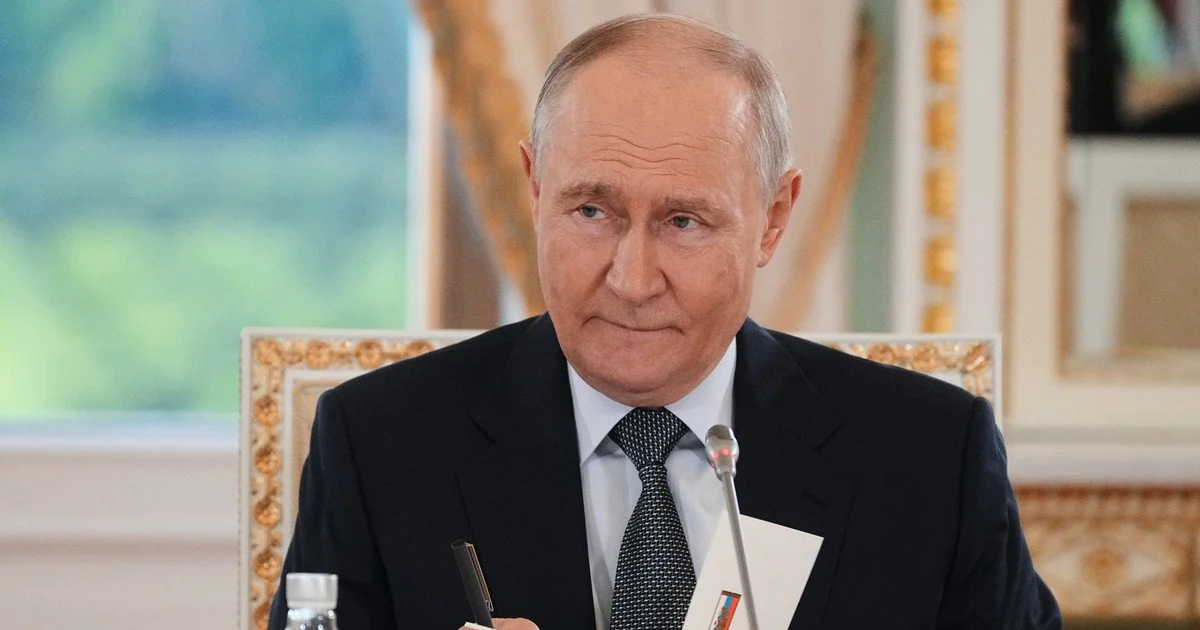
Dictator Putin / © Associated Press
The full-scale war against Ukraine could represent a historical turning point for Russia, akin to the Crimean War of the 19th century, after which the Russian Empire long lost its status as a leading global power.
This is according to international journalist Renzo Cianfanelli, writing in an opinion piece for the Italian-American publication Voce di New York.
The author reminds us that over 170 years ago, Russia’s defeat in the Crimean War of 1853–1856 exposed its economic backwardness, diplomatic isolation, and a crisis in public administration. The subsequent reforms by Emperor Alexander II only partially modernized the country but simultaneously laid the groundwork for a future crisis of Russian autocracy.
In Cianfanelli’s view, the current war against Ukraine may lead to comparable historical outcomes.
He states that the Kremlin anticipated a swift victory but instead found itself embroiled in a protracted and draining conflict with no clear prospect of achieving its objectives. Meanwhile, Ukraine is intensifying drone attacks on Russian territory, targeting military and strategic sites, including those far from the front lines.
“Putin’s hopes of restoring Russia’s greatness as a nuclear superpower, interacting as an equal with the United States and China, are a mirage,” the journalist notes.
The author also emphasizes that Moscow is becoming increasingly reliant on China, both in trade and diplomatic support, even though both countries officially continue to describe their relationship as an equal partnership.
According to Cianfanelli, unlike in the 19th century, Russia’s current leadership is unlikely to respond to military setbacks with large-scale reforms. Instead, the Kremlin is banking on further centralization of power, increased control over society, and mobilization mechanisms.
“History shows that prolonged, inconclusive wars rarely strengthen authoritarian systems indefinitely,” the author points out.
He explains that protracted wars deplete a state’s resources, narrow political choices, and gradually erode the trust upon which authoritarian rule depends.
In conclusion, the journalist suggests that even without a formal military defeat, the current war could mark a historical milestone for Russia.
“The second Crimean War might not end in military defeat. However, it could still become the moment when historians conclude that Russia ceased to be an independent great power and entered a prolonged era of strategic dependence on China,” Cianfanelli summarizes.
Earlier reports indicated that the Kremlin is paying a high price for the war. Moscow’s prioritization of military efforts has led to the Russian economy showing increasingly pronounced signs of crisis.
We previously informed that the Kremlin is feeling the consequences of the war more and more acutely, and the accumulation of internal problems might compel the dictator Putin to enter into negotiations.
Comments Sort: New Old Popular Send