

The Russian Federation has commenced the deployment of launchers for North Korean missiles in the Voronezh region, capable of reaching seven Ukrainian oblasts.
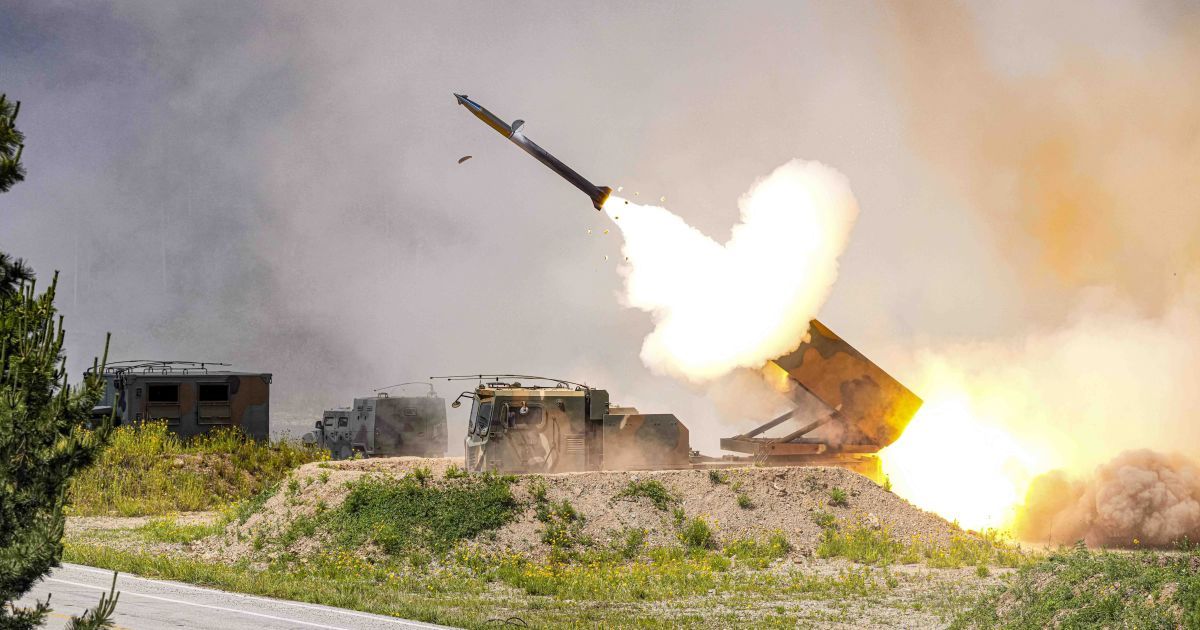
DPRK Missile / © Associated Press
Russia has begun deploying six launchers for North Korean ballistic missiles in the Voronezh region, which could potentially target seven Ukrainian oblasts: Sumy, Kharkiv, Chernihiv, Poltava, Kyiv, Dnipropetrovsk, and Zaporizhzhia.
A report from the ISW indicates that the Main Intelligence Directorate (GUR) has confirmed the transfer of approximately 50 KN-23, KN-24, and KN-30 (Hwasong-11C) missiles to Russia as of July 2026. The six launchers will be capable of launching up to 120 missiles in total.
What are the characteristics of the KN-30
The KN-30 is the Western designation for the North Korean missile Hwasong-11C, also referred to as Hwasong-11Da. It represents an enlarged variant of the Hwasong-11 family, which also includes the KN-23 and KN-24. This missile belongs to the category of short-range ballistic missiles, features a solid-fuel engine, and is launched from a mobile ground-based platform.
The first known test launch of the Hwasong-11C occurred on March 25, 2021. During this test, the missile demonstrated a range of at least 600 kilometers, according to Militarnyi.
The NCNK analytical center cites the South Korean Ministry of Defense’s description, stating that the Hwasong-11C is a variant equipped with a heavy warhead. The precise specifications of the warhead remain subjects of estimation: the DPRK claimed that the KN-30 can carry a warhead weighing 2.5 tons, though, of course, there is no confirmation of this assertion.
Why this is dangerous
The positioning of launchers in the Voronezh region expands Russia’s capacity to employ North Korean missiles from territory closer to Ukraine. According to ISW, citing the GUR, the potential reach encompasses seven Ukrainian oblasts, including Kyiv.
Consequently, Russia is creating conditions to augment its terror against Ukraine with new DPRK missiles, mirroring the use of KN-23 and KN-24, which the Kremlin has already employed for strikes against Ukraine. These also belong to the same Hwasong-11 family. However, North Korean KN-23s can deviate from their targets by hundreds of meters or even kilometers, despite carrying significantly heavier warheads than Russian Iskander-M missiles.
It is noteworthy that Ukraine is currently working on anti-ballistic defense systems. For instance, President Volodymyr Zelenskyy stated on July 13 that new missiles for anti-ballistic systems are needed daily, and intercepting ballistic strikes is challenging. On that same day, Ukraine, along with France, the United Kingdom, and Germany, announced the launch of the FREYJA anti-ballistic program.
“You all see the threat that ballistics currently pose. In Russia’s war against Ukraine, ballistic strikes have become Russia’s last resort—truly its final means to prolong this bloody conflict. Putin has tried for all the years of the full-scale war to break us, everyone, to break Ukraine, Ukrainians, their motivation, their spirit, to break the spirit of our people. The front does not allow him to do so, and this year our positions—Ukraine’s positions on the front—are stronger than in any other year of the war. Emmanuel is absolutely right: we must identify precisely those things that, under the current conditions on the front, can support us and allow us to put pressure on Russia, undoubtedly, for the sake of diplomacy. Putin has tried many different means to exert pressure, to kill, to destroy, and ballistics for him is a means that is objectively difficult for us to counter, very difficult,” said the president in a statement published on the official website of the head of state.
The FREYJA program aims to combine the political, governmental, and industrial capabilities of partners to develop an anti-ballistic system and its associated missiles. In light of the commencement of new launcher deployments in the Voronezh region, this remains one of the key avenues for strengthening the defense of Ukrainian cities.
Related topics
DPRK Missile Russia Comments Sort: New Old Popular Send