

The war in Ukraine and its conclusion have several key scenarios — an expert who calculates the options shared the details.
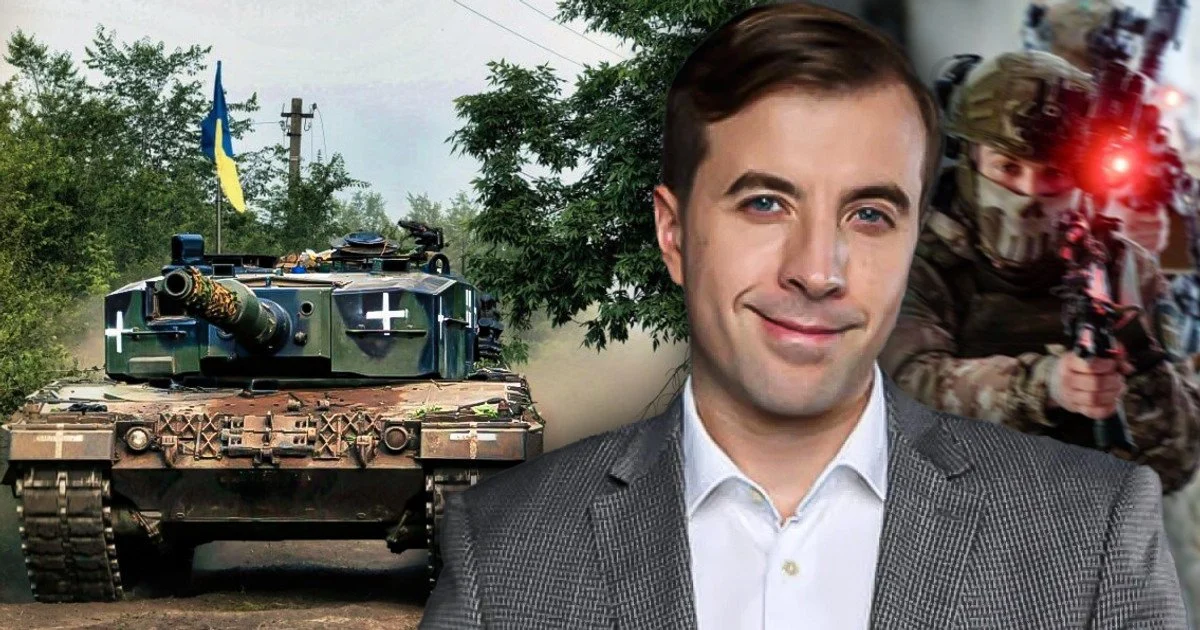
Futurologist Andriy Dlihach made a forecast regarding the duration and end of the war in Ukraine / © TSN
June and July 2026 could determine a lot — this was stated by the President of Ukraine Volodymyr Zelenskyi during a joint briefing with the leader of Estonia, Alar Karis. Zelenskyi’s statement began to be actively discussed, and social media users left hundreds of comments with different content regarding this.
Will the war in Ukraine, or at least the active hostilities, indeed approach its end this summer — futurologist and Doctor of Economic Sciences Andriy Dlihach shared his opinion on this, analyzing the situation from a scientific point of view, in a commentary for TSN.ua.
As is known, futurology is forecasting based, in particular, on scientific, economic, and technological data and methods. It is a field of research concerned with constructing scenarios for the development of events. In other words, futurologists assess existing risks.
When will the war in Ukraine end?
“The war will not end in the summer of 2026, and this should not put us in a stupor. If something is postponed to the future, then this future may not come. We conducted a massive study, analyzing what gave countries that undergo trials the opportunity to be effective, survive, and achieve better results. The answer is very simple — only the optimism of the nation provided such an opportunity. It is a better safeguard against economic disaster than economic tools. For me, this became an unexpected and clear conclusion,” Andriy Dlihach states with confidence in his voice.
He continues: “Statistics show the following: Russia’s missile stocks are not depleting, and Ukraine’s missile interception efficiency is slightly improving. Regarding ballistic missiles, this is the only area where Russia remains positive. Only ballistics. But its cost is high, and the quantity is limited; Russia cannot significantly increase production volumes.”
According to Dlihach, there is another important circumstance: “Ukrainian operations to strike enemy supply systems and long-range systems are destroying Russian logistics. Half of the rolling stock that Russia used for ground logistics to Crimea has been destroyed. This is about 7,000 trucks. Accordingly, the Russian Federation has nothing to apply pressure on the front. For them, the cost of one captured square kilometer has increased sixfold in recent months. All this would be normal for Russia if they had at least some hopes, for example, for the economy. But their economy continues to stagnate. Negative economic indicators have increased — in the first 5 months, the federal budget deficit reached the planned annual figure. Where to get money? Only through emission. China refuses to finance.”
War in Ukraine: Expert Predicts Possible Russian Designs
In Dlihach’s opinion, at first glance, everything suggests that Russia needs to end the war in the coming months.
“It cannot finance it, maintain such a situation. But this does not mean that Russia will make an economically balanced and logical move. It could mean that the Russian Federation, for example, will escalate to quickly involve China in the war. Russia may launch a missile strike or intensify its terrorist war in the Baltics and Poland. We have modeled such a scenario, and it is highly probable. Russia will definitely not agree to a quiet end to the war in Ukraine, to some status quo. Putin will try to simply shift this war to another plane. If not a physical war, then it will be a political and economic war against Ukraine. It will be a terrorist war. The only thing that will not happen is a nuclear war. We do not see it in any scenario, because it is not a winning scenario for Russia, but a losing one.”
Pause for a New War in Ukraine
At the same time, Dlihach says that he has not changed his forecast regarding the fact that a pause in the war is not ruled out in the near future, after which Russia may launch a new wave of war against Ukraine.
“This remains the basic scenario. What can Ukraine do to prevent the war from resuming?” the expert asks.
And he answers it as follows: “Make the war impossible for Russia. This means destroying the Russian military-industrial complex. We call this strategy the ‘bee strategy against the bear.’ It involves fifteen hundred targets that must be destroyed using Ukrainian long-range systems. But if a pause occurs before we do this, Russia will retain its potential to resume the war. So, currently, it is strategically more advantageous for Ukraine to increase its own potential. If we do not receive ‘Tomahawk’ missiles, then at the expense of our own systems, we must inflict irreparable losses on the Russian economy and the Russian military-industrial complex. So that the Russian Federation cannot recover from this, and at the same time, allies do not lift sanctions. And then move on to the issue of peace. If peace for Ukraine is simply guaranteed by security agreements, in a world where agreements have ceased to be effective, it will be a losing scenario. Russia will indeed resume the military scenario or similar scenarios, counting on Europe and involving China. A positive scenario for Ukraine is precisely the continuation of the strategic neutralization of the enemy.”
Russian Missile Strikes on Ukraine and the Final Outcome: A Forecast
In Dlihach’s opinion, the most likely scenario is one where a certain intensity of Russian missile attacks on Ukraine will be maintained, but will still somewhat decrease.
“This scenario is more likely than a real agreement, than a meeting between Zelenskyi and Putin, than the signing of agreements and a freezing of the conflict. I do not see a freezing of the war in 2026. Is it possible in 2027? It is beyond the horizon of events. Conditions may arise such that Russia will effectively stop, and Ukraine will not move to offensive actions, as this would require greater mobilization. Such a situation in strategic science and mathematics is called a ‘Nash equilibrium’ — when the situation develops in the best way for everyone, but exiting it worsens the conditions for each,” the expert summarizes.
Comments Sort: New Old Popular Send