
Russia is incapable of opening a second front but is preparing hybrid provocations against NATO. Experts emphasize: Putin does not plan to passively lose the war against Ukraine.
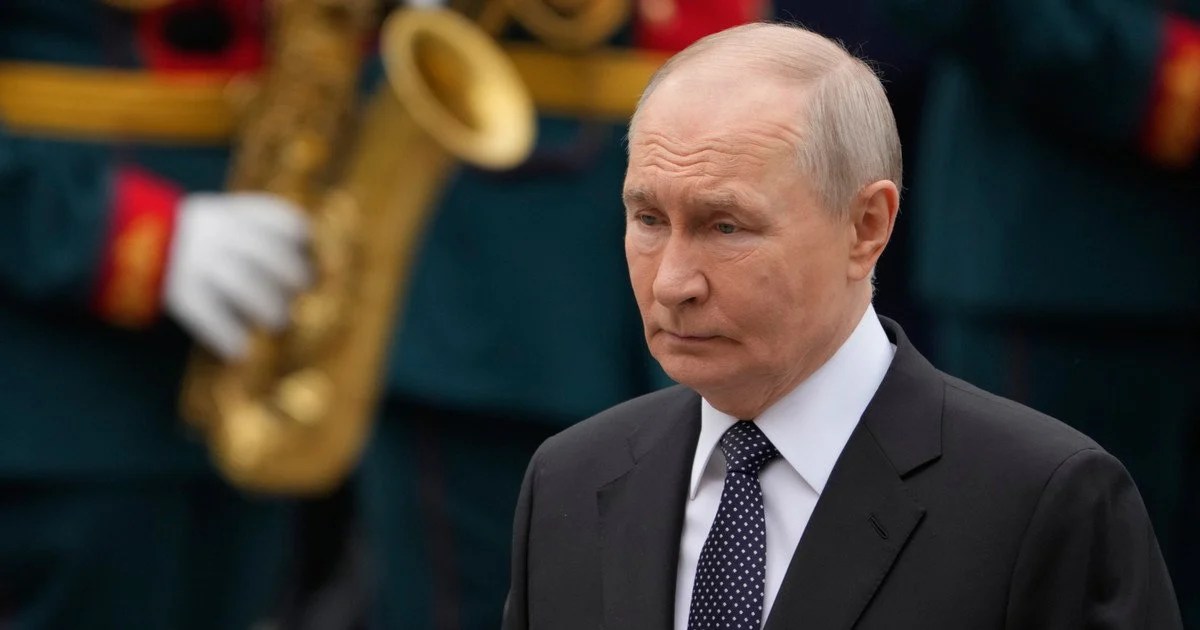
Volodymyr Putin / © Associated Press
Contents
Against the backdrop of increasing pressure from Ukraine, the Kremlin may try to test NATO’s unity. The countries of the Alliance’s eastern flank warn: Russia is likely preparing a possible “provocation” in the Baltic region or Poland to test the cohesion of the Western military bloc.
This is reported by The Guardian, citing sources in two countries.
Western interlocutors also express concern that the risks may increase amid pressure on the Kremlin due to Ukraine’s campaign of long-range strikes on targets near Moscow and St. Petersburg.
On Monday, Latvian intelligence reported: “We see signs that Russia is preparing military provocations against the Baltic countries or Poland.” At the same time, according to the department’s assessment, it is not about a full-scale invasion.
Russian threat to the Baltic states
A similar statement was made last week by a high-level political source from another NATO country. According to him, “we are receiving intelligence” that Russian President Volodymyr Putin “is planning something against the Baltic states.”
The source suggests that the dictator may seek to test the readiness of the United States to defend the smallest allies in the Alliance – Estonia, Lithuania, and Latvia – in an attempt to “roll the dice,” as Russia faces increasing difficulties in the war against Ukraine.
On Thursday evening, Polish Prime Minister Donald Tusk openly stated his concerns about the situation.
“We also unanimously share the opinion that the situation is very unstable, and various types of escalation can be expected in the coming weeks and months. We want to prepare as a group of countries that are directly exposed to this risk,” Tusk said after the Eastern Flank summit in Gdansk.
Russia may resort to hybrid attacks against NATO – what is the goal
Latvian intelligence emphasized that Russia currently does not have the capacity to open a second front, but may resort to “hybrid attacks such as missiles, drones, or other actions aimed at sending a signal: stop supporting Ukraine, otherwise you will have your own problems.”
Although these signals seem interconnected, they are not yet backed by a large number of confirmed details. This distinguishes them from the detailed warnings that the CIA and MI6 released on the eve of Russia’s full-scale invasion of Ukraine.
These signals emerged precisely at a time when the Russian offensive in Ukraine had effectively stalled. This gives rise to speculation that the Kremlin may resort to other scenarios to break the stalemate or shift the balance in its favor.
“Moscow will look for ways to disrupt the current trend – through horizontal escalation [spreading the conflict to other countries] or doing something elsewhere. It is not worth expecting Russia to passively lose,” noted Keir Giles, a Russia expert at the Chatham House think tank.
The publication recalled that since the beginning of the full-scale war against Ukraine, Russia has repeatedly resorted to sabotage and provocations. Among such incidents are the installation of incendiary devices in DHL packages in Great Britain, Poland, and Germany in the summer of 2024.
Last September, 19 Russian decoy drones violated Polish airspace, forcing NATO to scramble fighter jets to intercept them, and residents of three eastern voivodeships were ordered to stay in shelters.
Signs of RF vulnerability and a retaliatory strike
Signs of RF vulnerability emerged this week when drone relay stations ceased operations in Belarus after Ukraine threatened to strike them. Ukrainian President Volodymyr Zelenskyy issued an ultimatum to Minsk last Friday, emphasizing that this equipment is used by Russia to attack Ukrainian territory.
One of the Telegram channels reported that the Belarusian authorities in the Brest and Gomel regions obliged mobile operators to dismantle the repeaters, explaining that they interfere with the nesting sites of black grouse.
At the same time, Ukraine continues to develop its own deep strike capabilities, capable of hitting targets up to 2,000 km deep into Russian territory. Last week alone, nearly 200 drones attacked a series of targets in Moscow, and after an attack on an oil refinery, a “black oil rain” poured over parts of the Russian capital.
One Western military source noted that there are fears that Russia may resort to a retaliatory strike if Putin feels excessive pressure, especially given that the war is increasingly being carried into the airspace over Moscow and St. Petersburg.
“I will not hide it – this is a dangerous period,” the source said.
Similar concerns about a possible escalation by Russia arose in the autumn of 2022. Then, a series of unexpected defeats of the occupiers in the Kharkiv region caused fears in the West that Moscow might even resort to the use of nuclear weapons for self-defense. However, no real signs of preparation for such a step were recorded, and by the end of the year, the front line stabilized.
Threat of Russia’s war with NATO – latest news
Despite significant losses in the war against Ukraine, Russia remains a long-term threat to European security. According to analyst Michael Coffman, the RF is capable of restoring its offensive potential within 5-7 years. The Kremlin is transforming the army, increasing its numbers to 1.3 million, and has adapted its defense industry to sanctions, relying on mass production of armored vehicles, artillery, and hundreds of thousands of drones. Experts warn that NATO should not underestimate these changes: Western armies have an advantage in aviation, but they lose in experience in conducting combat operations with the mass use of UAVs and EW systems.
NATO Secretary General Mark Rutte issued a warning to Putin: the Alliance is ready to respond immediately to any aggression against member states. Rutte emphasized that the bloc will defend itself, and the upcoming summit on July 7-8 in Ankara will demonstrate the absolute unity of the 32 countries. He announced the signing of large-scale defense contracts worth tens of billions of dollars and the beginning of a “defense industrial revolution” to reduce bureaucracy and overcome the fragmentation of the European defense industry.
Comments Sort: New Old Popular Send