

Ukraine is under daily assault from Shahed drones, and their production is rapidly increasing. Analysts point out that Chinese components play a crucial role in this, particularly the microchips that control the drones’ flight and guidance.
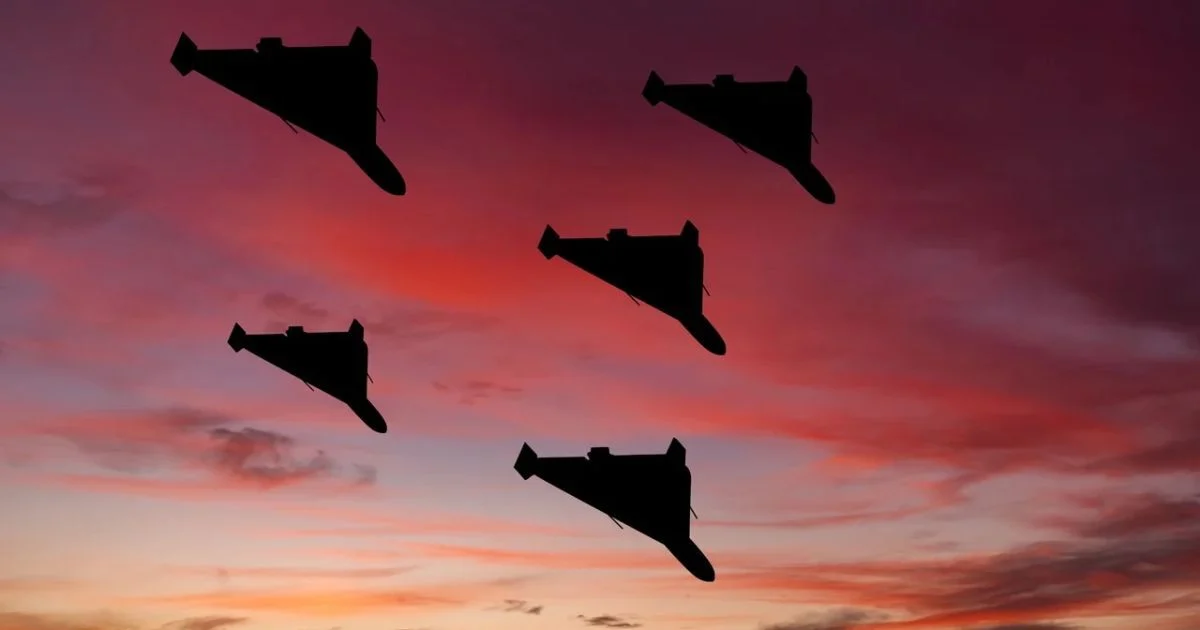
Shahed / © Getty Images
Russia has significantly ramped up the production of Shahed-type attack drones, which it uses to strike Ukraine daily. Meanwhile, China plays a pivotal role in this scaling up, supplying a substantial portion of the components for these unmanned aerial vehicles, including the microchips that essentially serve as the drone’s “brain.”
This information is detailed in a report by The Telegraph.
The production is taking place in the special economic zone “Alabuga” in Russia’s Tatarstan. According to analysts, in 2023, approximately 10 Shahed-136 drones were manufactured there per day. This figure has now surged to over 400 units daily.
Initially, Russia received Shahed drones directly from Iran, where they were developed. Subsequently, Moscow launched its own production under an agreement with Tehran. However, it is the Chinese components, as assessed by experts, that have enabled Russia to rapidly expand its production volume.
Spencer Faragasso, a senior fellow at the Institute for Science and International Security, stated that China has effectively become the primary benefactor of Russia’s military-industrial complex.
“This has provided Russia with the capability and means to produce its own weaponry. From my perspective, China is an integral part of this war and cannot fully distance itself from it,” he noted.
According to Ukrainian military intelligence, approximately 65% of the components used in drone production at “Alabuga” are of Chinese origin. This includes semiconductors, programmable microchips, batteries, antennas, electronics, carbon fiber, and in some instances, even manufacturing line equipment.
Field-Programmable Gate Arrays (FPGAs) are particularly critical. These chips govern the drone’s navigation, flight, guidance, and targeting. Such chips can be reprogrammed even after the drone’s production, allowing for its modernization to meet new mission requirements.
Chinese parts have not only ensured Russia’s stable production but have also helped enhance the Shahed drones themselves. Newer modifications boast increased range, reduced radar visibility, and improved protection against electronic warfare systems.
Furthermore, access to affordable Chinese components has significantly lowered production costs. While a Shahed drone purchased from Iran might have cost around $20,000 in 2022, after launching domestic production in Russia, the price, according to analyst estimates, has dropped to $7,000–$10,000.
It is precisely this affordability and mass production capability that allows Russia to launch thousands of such drones into Ukraine. They are employed to deplete Ukraine’s air defense systems: Shahed drones force air defense resources to be expended, while Russia simultaneously launches cruise and ballistic missiles.
In the past month alone, Russia deployed over 8,000 such drones against Ukraine – the highest monthly figure since the full-scale invasion began.
Analysts warn that if the West does not restrict Russia’s access to Chinese components, and Ukraine cannot strike the production facilities in “Alabuga,” Russia could reach a monthly production rate of up to 10,000 drones by the end of 2026.
Meanwhile, Ukraine is already adapting to this threat. Microphone networks are used to detect Shahed drones by capturing the distinctive engine sound. Mobile firing groups and interceptor drones are also operational, reducing reliance on costly air defense missiles.
According to Caroline Giraud, a researcher at the Institute for the Study of War, “Alabuga” itself may become vulnerable to Ukrainian strikes over time, as Kyiv enhances its long-range drone capabilities and intensifies attacks on Russia’s defense industry.
Previously, Deputy Commander of the Ukrainian Air Force, Pavlo Lyashko, stated that Russian invaders are substantially increasing the number of Shahed-type attack drones they launch into Ukrainian territory.
According to him, the number of drones launched simultaneously is constantly rising, complicating the efforts of Ukrainian air defense.
It was also reported that Russians have begun deploying new modifications of “Geran” attack drones against Ukrainian interceptor drones.
Comments Sort by: New Old Popular Submit