

The conflict between the Russian Federation and Ukraine has evolved into a war of attrition, mirroring aspects of World War I, where marginal territorial gains come at the cost of substantial human casualties.
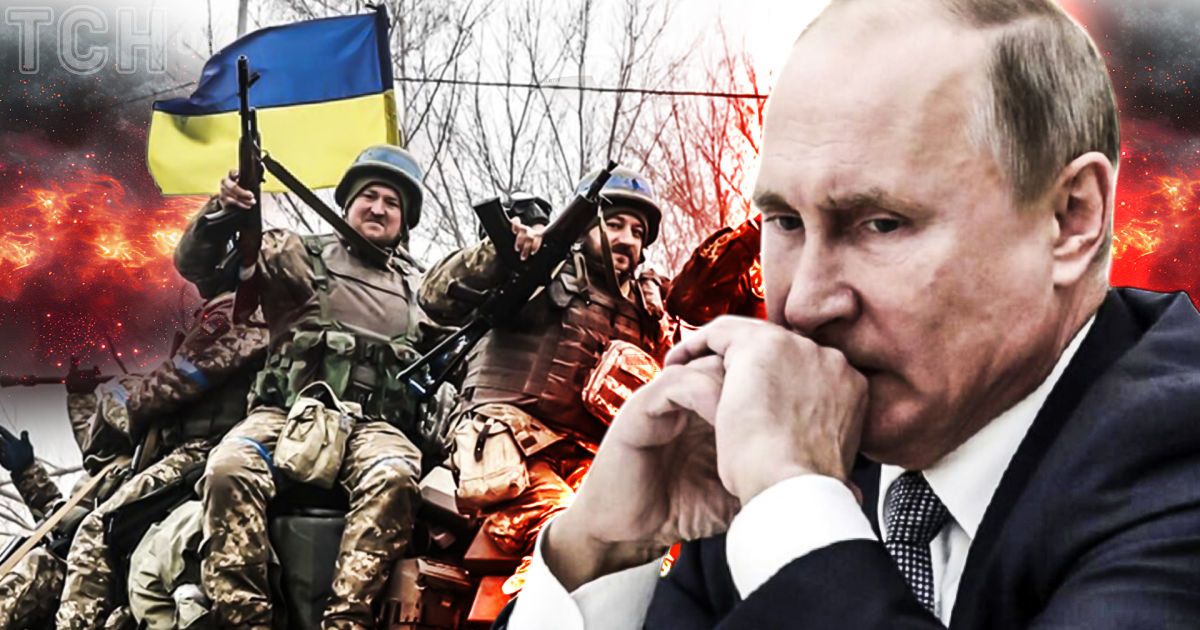
Russian Federation’s War Against Ukraine / © TSN.ua
The war initiated by Vladimir Putin, termed a “special military operation” with the objective of swiftly dismantling Ukrainian statehood, has, five years in, entered a phase that numerous analysts characterize as a strategic “zugzwang” – a situation where any further move inevitably worsens the position.
This is reported by The Washington Post.
The publication emphasizes that the Kremlin’s expectations for a swift conclusion to the war have not materialized. By 2026, Russia has managed to capture merely about 0.04% of Ukraine’s territory, and in certain months, it has even relinquished previously occupied areas.
Concurrently, according to The Economist’s estimations, over four years of hostilities, Russia’s military personnel losses (including killed and wounded) amount to approximately 3% of its pre-war mobilization capacity.
The author of the article also references The Wall Street Journal, which notes that a significant portion of the Russian army’s personnel comprises poorly trained mobilized individuals, who are rapidly deployed to the front lines. This exacerbates the losses for the invading Russian forces, particularly given the high intensity of combat operations and the deployment of Ukrainian drones, which have established extensive “kill zones” extending up to 30 kilometers.
The material underscores that contemporary warfare has assumed the characteristics of positional conflict, reminiscent of World War I, where minor advances are accompanied by immense human losses. Russian units, as assessed by journalists, are compelled to restrict their movements due to the constant threat posed by drones, which complicates logistics and heightens the risk of casualties.
It is separately highlighted that, owing to the threat of attacks from Ukrainian drones, Putin is increasingly forced to remain in shelters, while such attacks have been recorded even in the vicinity of Moscow.
Meanwhile, the conflict, according to expert assessments, has already led to the strengthening of NATO and has altered Europe’s security architecture.
Analysts cited by The Washington Post describe Russia’s current state as a “negative equilibrium” – a condition where a state formally maintains stability but is gradually depleting its own resources and potential.
Former Russian officials and military analysts quoted in the piece believe the war has entered a phase of strategic zugzwang, where any decision by the Kremlin offers no advantage and only intensifies long-term losses. They suggest that the future trajectory of events may determine Russia’s capacity to adapt to the shifting balance of power in the war.
The War in Ukraine is Backfiring on Putin — Latest News
We remind you that analysts at the Institute for the Study of War (ISW) believe that the Russian dictator has a distorted perception of his troops’ “successes” in Ukraine, as he is being lied to about the situation on the front lines.
Earlier, the Daily Express reported, citing intelligence data, that Ukrainian drones are dominating segments of the so-called Crimea-Donetsk corridor – a strategic highway used for transporting fuel, ammunition, and military supplies from Russia.
Previously, the publication Bild identified three key factors that are turning the war of attrition into a serious problem for the Kremlin.
Comments Sort: New Old Popular Submit