
Right-wing and left-wing populists in Germany, France, and Austria are actively advocating for the restoration of ties with the Kremlin.
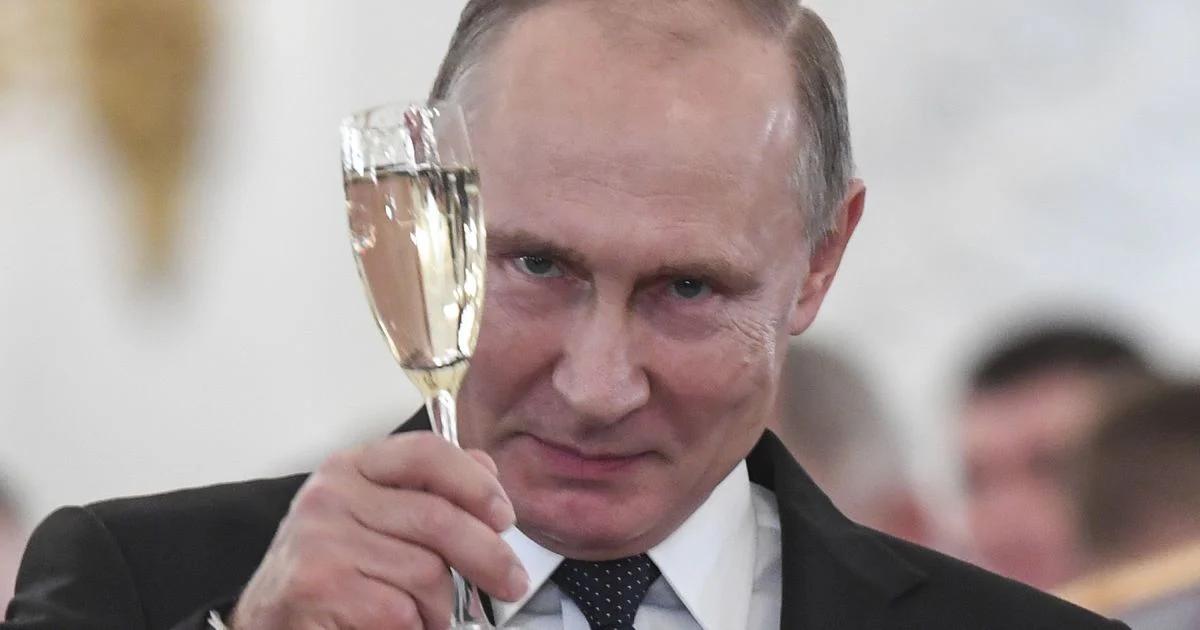
President of Russia Vladimir Putin / © Associated Press
Contents
- Pro-Russian sentiments within the “Alternative for Germany” party
- Populist forces are strengthening their positions across Germany
- Potential victory for populists in French elections – what threat it poses to Ukraine
- Pro-Russian populists in Austria
- Pro-Russian politicians in Great Britain
The growing political weight of pro-Russian forces in Germany and France signals a disturbing trend: European populism is increasingly openly playing into the hands of the Kremlin. Political leaders of these movements plan to review sanctions policy and scale back support for Ukraine.
This is reported in an article by The Telegraph.
European populism has a little-known but telling characteristic – a fondness for Russia. Despite the brutal war of aggression waged by the Russian Federation against Ukraine, right-wing nationalist forces in Europe are calling for the lifting of sanctions against Moscow and the normalization of relations with it.
In Germany, France, and Austria, pro-Russian populists are approaching power at both regional and national levels. In other European countries, the Kremlin’s influence may be less visible, but it can still affect the political balance and decisions that do not align with Ukraine’s interests.
Pro-Russian sentiments within the “Alternative for Germany” party
As early as next month, the issue of potentially re-establishing relations with Russia could come to the forefront. For instance, on September 6, residents of the eastern German state of Saxony-Anhalt will elect a new regional parliament. The far-right party “Alternative for Germany” (AfD) is projected to win over 40% of the vote. Such a result would be a significant blow to the currently dominant Christian Democrats (CDU) and pose an unprecedented right-wing challenge to German Chancellor Friedrich Merz at the national level.
Among the key planks of the AfD’s platform are the reintroduction of the Russian language into school curricula and the resumption of student exchanges with the Russian Federation. During the Cold War, Russian was a mandatory language in schools in East Germany, where the Soviet presence largely defined life in the GDR. For the older generation, so-called “Ostalgie” (nostalgia for the East) is associated, in part, with memories of cheap Russian gas and the belief that the Russian Federation is closer to them than the West.
At the same time, the AfD, which promotes the idea of “remigration” – the return of refugees, migrants, and their descendants – opposes the cessation of economic and cultural ties with Russia following its full-scale invasion of Ukraine. According to the party, such anti-Russian policies, as well as Berlin’s military and financial support for Ukraine, “do not serve Germany’s interests.”
Pro-Russian sentiments are characteristic not only of Germany’s right-wing populist forces but also of representatives of the opposite – left-wing – political spectrum. The “Left Party” (Die Linke), successor to the former communists, as well as Sahra Wagenknecht’s left-populist party (BSW), demonstrate no less affection for Moscow than the AfD.
Populist forces are strengthening their positions across Germany
Collectively, the far-left political forces could garner around 17% of the vote. Thus, pro-Russian parties of both right-wing and left-wing orientation in Saxony-Anhalt could represent more than half of the voters. A similar trend is observed across the territory of former East Germany as a whole.
Populist forces are reinforcing their positions nationwide. In the East, the AfD leads the CDU by approximately 20 percentage points, while in the western states, it also holds a slight advantage – averaging around 4%.
Should federal elections be held in the near future, the AfD could become the country’s largest political force, securing over 200 seats in the Bundestag out of 630. Although this would not be enough to form a majority, control over every third parliamentary seat would represent the most significant success for German nationalism since 1945.
Russian President Vladimir Putin, who once served as a KGB officer in Saxony during the fall of the Berlin Wall, is likely closely monitoring these developments. He may now witness the strengthening of the AfD in the territories where he once operated.
Potential victory for populists in French elections – what threat it poses to Ukraine
The situation could significantly change before the federal elections in Germany, scheduled for 2029. Meanwhile, France will hold its presidential elections as early as next April, and forecasts there also show favorable prospects for populist forces, particularly Marine Le Pen and her party, the National Rally.
Such a turn of events could be advantageous for the Kremlin. The last time Le Pen and French President Emmanuel Macron met was in the final televised debates before the 2022 elections. Macron then sharply criticized his opponent, accusing her of being dependent on the Russian leader: “You were one of the first European leaders to recognize Russia’s annexation of Crimea.” According to him, later, Le Pen’s 2017 campaign received a significant loan from a bank linked to the Kremlin.
Since 2022, Le Pen has made no public statements or taken any actions that would indicate a shift in her stance towards Russia. On the contrary, the National Rally candidate’s program envisages a “privileged partnership” with Moscow, the lifting of sanctions, and an end to what the party calls the “demonization” of Russia by the EU and NATO.
If Le Pen becomes President of France in the future, she would likely be able to find common ground with other pro-Russian populists. Among them, U.S. President Donald Trump holds a special place. Despite traditionally strong anti-American sentiments in France, Le Pen would most likely seek to establish cooperation with the head of the White House and act as a mediator in achieving a ceasefire in Ukraine on terms favorable to Moscow.
The only positive aspect for Ukraine might be that a weakening of French support would hardly have a drastic impact on the course of the war. Even under Macron’s presidency, France provided significantly less aid to Ukraine than Germany and Great Britain.
Pro-Russian populists in Austria
Another Western European country where pro-Russian populists maintain a significant political influence remains Austria. The far-right Freedom Party of Austria (FPÖ), led by Herbert Kickl, holds the largest faction in parliament, but due to coalitions with other political forces, it is not represented in the government.
Among the mentioned political forces, the FPÖ likely has some of the closest contacts with the Kremlin. Former Austrian Foreign Minister Karin Kneissl, supported by the FPÖ, invited Putin to her wedding in 2018. She later moved to Saint Petersburg.
After the FPÖ entered into a “friendship agreement” with Russia about 10 years ago, its financial dealings with oligarchs close to the Kremlin have repeatedly caused political scandals in Vienna. However, this does not seem to deter the party’s voters, for whom a pro-Russian stance remains a customary position.
Pro-Russian politicians in Great Britain
The situation in Great Britain, where its own “patriotic” political forces are active, is no less interesting. For instance, in 2014, the current leader of the far-right party Reform UK, Nigel Farage, stated that he admired Putin the most among world leaders as an “operator.” Furthermore, he compared NATO’s policy towards Russia to “poking a bear with a stick.”
Later, Farage became considerably more cautious in his pro-Russian statements. Meanwhile, his close associate in Strasbourg and former Reform leader in Wales, Nathan Gill, received a 10-year prison sentence for bribery – he took money in exchange for statements favoring Russia.
Although no evidence of Farage’s involvement in Gill’s bribery was found, this incident demonstrated how close the pro-Russian sympathies of his political circle could be. This issue also attracted attention after Reform-controlled county councils in Essex, Norfolk, and Suffolk dismantled Ukrainian flags that had been installed after the start of Russia’s full-scale invasion.
The author of the article suggests that if Farage were to come to Downing Street, Britain would no longer be one of the main Western leaders in supporting Ukraine, as it has been under prime ministers since Boris Johnson. A Reform government might attempt to establish relations with the Kremlin; however, it is likely that the British monarch, who has consistently demonstrated support for Ukraine, would hardly agree to a state visit by Putin.
Incidentally, meanwhile, following setbacks in Ukraine, the Kremlin is increasingly directing its hybrid operations towards Europe, where a series of sabotage, explosions, and attacks occurred in the first half of August. European capitals fear that against the backdrop of the war, Russia is intensifying its tactics of sabotage and intimidation against NATO countries.
Related topics
Europe Russia Germany France Austria Great Britain Comments Sort: New Old Popular Send